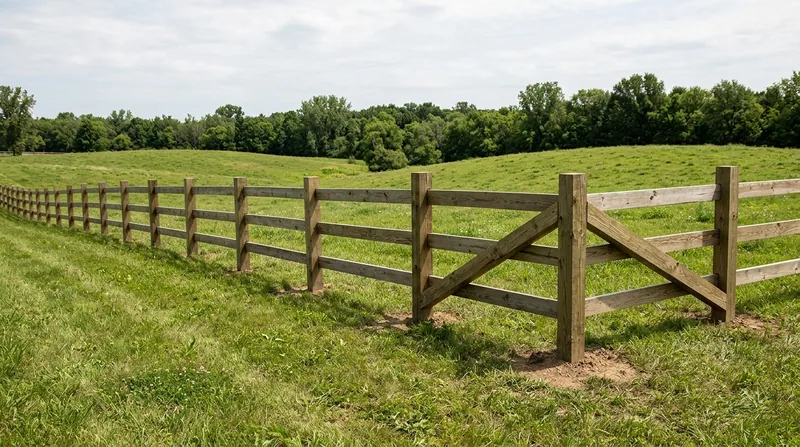




Farm fence installation in Minneapolis means building durable perimeter and pasture fencing on acreage where livestock, equipment, and seasonal weather all demand honest work. Whether you're holding horses on a few acres in western Hennepin County, securing a hobby farm in northern Anoka, or running cattle across Dakota County land, the fencing has to stand against animal pressure, gate wear, and Minnesota weather cycles. Minneapolis Fence Pros has built ranch rail, no-climb horse fence, field wire, and pipe fencing since 2011 for property owners who need their perimeter and internal divisions to work year-round. We work from your property line, understand gate placement for livestock flow and equipment access, and build to the load and scope you describe, not a generic template. Call us at (952) 206-3832 for a free estimate, or read on to understand what makes ranch fencing different from residential privacy fence.
Why Farm and Ranch Fencing Matters in Minneapolis Acreage
Residential fence rules do not apply to pasture and ranch perimeter work. Your property may sit outside city limits or in a county jurisdiction where setback and height rules differ from Minneapolis proper. Livestock fencing is about containment, safety, and durability under constant pressure from animals, weather, and equipment use. A split rail or no-climb horse fence needs solid post placement, proper spacing, and materials chosen for the load it will carry. Gates must swing freely and close securely, especially when animals learn to push. Post rot, sagging rails, and loose wire are not cosmetic issues on a working farm, they are operational failures.
- Posts set in concrete below frost depth ensure the fence stands through freeze-thaw cycles and animal pressure year after year.
- Rail spacing and gauge are determined by the animal you are containing, from horses to cattle to sheep, and the equipment that has to pass through gates.
- Field wire and pipe fencing require proper tension and support to prevent sagging and allow animals to move along the perimeter without creating weak points.
- Gates need self-closing and self-latching hardware if they are on livestock pasture, because a gate left ajar becomes a lost animal or a liability.
- Minnesota 811 utility locates are required by law before we dig any post holes, protecting buried electric, gas, water and communication lines on your property.
These details separate working ranch fencing from decorative residential fence, and they are why we size posts, space rails, and set hardware with livestock and equipment in mind.
Key info: Hennepin County, Anoka County, and Dakota County each have their own setback and height rules for rural property lines. We verify requirements with the county assessor and your existing survey before we break ground. If you are in a master-planned community or acreage development with deed restrictions, those rules supersede county code, and we work within them.
For more detail on permit and zoning questions specific to your location, contact the Hennepin County assessor's office or your county planning department. They will confirm setback, height, and material rules for your parcel.
How We Build Farm and Ranch Fencing in Minneapolis: From Survey to Gate
Ranch fencing starts with your existing survey or the property line you identify. We do not determine property lines, that is surveyor work, but we install on the line you mark. From there, we assess the terrain, drainage, and animal pressure you expect, then recommend post depth, rail type, spacing, and gate placement. We source pressure-treated pine or cedar rails, galvanized or powder-coated steel posts and hardware, and field wire or no-climb mesh in the gauge and size your animals require. Each job gets a site visit, a written scope, and a timeline before we schedule the crew.
- We call 811 for a utility locate and mark all buried lines before any post holes are dug.
- Posts are set in concrete below the frost line, with proper backfill and tamping to prevent settling and frost heave.
- Rails are installed level or racked to follow terrain, with consistent spacing and secure fastening at each post.
- Gates are hung with heavy-duty hinges, self-closing hardware, and latches that hold under animal pressure and repeated use.
- We inspect the completed fence under load, tighten any loose connections, and walk you through maintenance expectations.
The result is a perimeter that contains livestock, allows equipment access, and requires minimal maintenance if you keep posts clear of debris and check fasteners seasonally. Learn more about our gate installation and repair services for custom hardware and automation options.
Local example: A 5-acre hobby farm in Plymouth with a 200-foot pasture perimeter and a 12-foot gate opening for equipment access requires 40 posts set in concrete, split rail or no-climb fencing, and a self-latching gate with heavy hinges. That job typically takes 3 to 4 days with two crew members, depending on soil conditions and terrain. The gate itself is a separate line item because hardware, automation, and installation complexity vary widely.
Fencing Methods for Farm and Ranch Use in Minneapolis
| Approach | Description | Best for |
|---|---|---|
| Split Rail Fence | Pressure-treated or cedar rails mortised into posts, typically 2 or 3 rails high, open design allows visibility and airflow. | Decorative perimeter, horse pasture, property definition on larger acreage. |
| No-Climb Horse Fence | Welded wire mesh with vertical and horizontal wires close enough that hooves cannot slip through, mounted on wood or metal posts. | Horse pasture, high-pressure containment, prevents hoof entanglement and escape. |
| Pipe Fence | Steel pipe posts and rails, galvanized or powder-coated, extremely durable and low-maintenance, visible and strong. | Cattle and livestock containment, equipment yards, high-traffic gates, long-term durability where maintenance budget is lower. |
| Field Wire Fencing | Wire mesh or barbed wire strung between wood or metal posts, tensioned with corner bracing and stretcher bars, requires regular inspection. | Large pasture perimeters, multi-animal containment, lower initial cost per linear foot on extensive acreage. |
Each method has a material cost, labor cost, and long-term maintenance profile. Split rail and no-climb are higher upfront but require less wire tension work. Pipe is durable and visible but heavier to install. Field wire is economical on large acreage but needs seasonal tension checks and post inspection. We recommend the method based on your animal, your budget, and how much inspection and adjustment you want to do yourself.
Farm and Ranch Fencing Cost in Minneapolis: What to Expect
Ranch fencing costs vary with material, terrain, post depth, and the type of containment you need. Costs begin around $13 per linear foot for basic split rail or field wire on level ground with good soil and easy access. A no-climb horse fence or pipe fencing runs higher because the material is stronger and installation labor is more involved. Gates add a separate cost based on width, hardware, and whether you want manual or automatic operation.
Factors that increase cost include difficult terrain or soft soil that requires deeper post holes or additional bracing, distance from the property access where equipment has to be staged, the number and size of gates, and any site clearing or debris removal needed before we start. A 200-foot pasture perimeter on level ground in Maple Grove or Woodbury costs less than the same perimeter on a slope in a wooded lot where we have to clear brush and hand-dig around roots and rocks.
We always recommend getting two or three estimates from contractors who understand livestock fencing, because the lowest price often reflects a difference in material gauge, post depth, or labor scope, not just a better deal. Visit our pricing page for detailed cost ranges by fencing type and a breakdown of what moves the price up or down. Call (952) 206-3832 for a free site estimate, and we will walk you through the options and the cost drivers for your specific property.
Farm and Ranch Fencing Near Me: What Minneapolis Homeowners Should Know
If you own acreage in or near Minneapolis and you are looking for a contractor who understands livestock fencing, post placement, gate operation, and the difference between residential and ranch work, start by checking that the contractor carries full insurance and has built ranch fencing before, not just residential privacy fence. Ask for references from other farm and hobby-farm owners, and ask those references about gate durability, post rot, and how the fence has held up after a full year of use.
Verify that the contractor will call 811 before digging and will work from your existing survey or the property line you identify. If you are unsure where your property line runs, hire a licensed surveyor to establish it before we install. Confirm whether your county or township requires a fence permit and whether any deed restrictions or HOA rules apply to your acreage, especially if you are in a master-planned rural development.
Ask the contractor to provide a written scope that includes post spacing, rail type and gauge, gate width and hardware, and the depth posts will be set. A professional estimate should include a timeline and a clear answer to the question of what maintenance you will need to do to keep the fence working. Minneapolis Fence Pros has been building farm and ranch fencing since 2011, and we are an AFA Member Installer. Contact us at (952) 206-3832 or visit our contact page to schedule a free estimate and discuss your acreage and your animals.
Farm & Ranch Fencing in Minneapolis: Pricing Guide
| Service | Price | Details |
|---|---|---|
| Split Rail Fence | Starting at $13/ft | Pressure-treated or cedar rails, posts set in concrete, 2 to 3 rails, level or racked installation on typical terrain |
| No-Climb Horse Fence | Starting at $16/ft | Welded wire mesh, wood or metal posts, secure fastening, prevents hoof entanglement and animal escape |
| Pipe Fence | Starting at $18/ft | Galvanized or powder-coated steel posts and rails, durable and low-maintenance, higher material and labor cost upfront |
| Field Wire and Barbed Wire | Starting at $8/ft | Wire mesh or barbed wire strung between posts, tensioned with corner bracing, economical on large acreage, requires seasonal maintenance |
| Gates and Hardware | Starting at $400 | Manual or self-closing hinges, latches, and bracing, wide variation based on gate width, material, and automation options |
| Estimate | Free | Site visit, written scope, timeline, and cost breakdown provided within 24 hours, no obligation to book |
Indicative pricing, the exact cost depends on square footage, finish, and site access. Free personalized estimate within 24h at (952) 206-3832.


