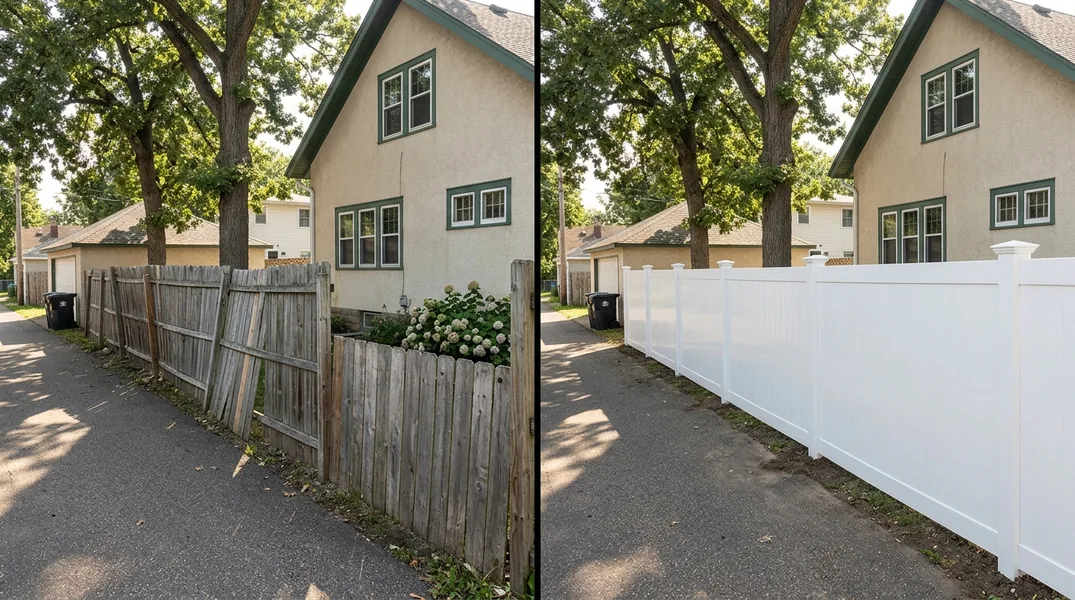
Why Minnesota Winter Demands Fence Material Selection
Minnesota winters are no joke. Temperatures plunge well below freezing, snow accumulates in heavy layers, and freeze-thaw cycles can wreak havoc on materials that aren't built to handle the stress. When you're investing in a new fence for your Minneapolis home, choosing the right material isn't just about aesthetics or initial cost. It's about selecting something that will stand up to the brutal seasonal swings that define our climate.
The challenge isn't simply the cold itself. It's what happens when ice melts and refreezes, when moisture penetrates materials, and when ground heave pushes fence posts upward. Each of the three most popular fence materials, cedar, vinyl, and chain link, responds differently to these stresses. Understanding those differences will help you make an informed decision that keeps your fence looking good and functioning properly for years to come.
Cedar Fencing: The Classic Choice with Real Maintenance Demands
Wood & Privacy Fence Installation using cedar remains a popular choice in Minneapolis and throughout Minnesota. Cedar offers natural beauty, warmth, and a timeless appeal that many homeowners prefer over synthetic alternatives. It's also relatively easy to repair individual sections if damage occurs, and it can be stained or sealed in any color you prefer. However, cedar demands respect in a Minnesota winter.
When temperatures drop and snow melts, moisture infiltrates cedar wood fibers. This repeated freeze-thaw cycle causes wood to expand and contract, leading to warping, cracking, and splitting. Cedar is naturally rot-resistant compared to other softwoods, but it's not immune to decay. Without proper maintenance, your cedar fence can develop soft spots, splinter, and deteriorate faster than you might expect. You'll need to seal or stain your fence every two to three years to maintain protection, and you should inspect it regularly for signs of damage. In harsh Minnesota winters, this ongoing commitment is essential if you want your cedar fence to last 15 to 20 years.
Vinyl Fencing: The Brittle Problem When Temperatures Drop
Vinyl & PVC Fence Installation has grown in popularity because it requires minimal maintenance and resists rot and insects. Many homeowners are drawn to vinyl for its clean appearance and the fact that you'll never need to paint or stain it. However, vinyl has a significant weakness in cold climates, and it's something you need to understand before choosing this material for your Minnesota property.
Vinyl becomes brittle in freezing temperatures. As the mercury drops, PVC plastic loses flexibility and becomes more prone to cracking and breaking. A fence panel that flexes slightly in mild weather can snap under stress when it's 10 degrees below zero. Additionally, vinyl can become discolored or chalky over time when exposed to intense UV rays during summer, then subjected to freeze-thaw cycles. While vinyl doesn't rot and doesn't require staining, it can be expensive to replace damaged sections, and finding matching material years later can be challenging. If you live in a particularly windy area or expect heavy snow loads on your fence, vinyl may not be the most durable choice for Minnesota winters.
Chain Link Fencing: The Durable Workhorse for Cold Climates
Chain Link Fence Installation is often overlooked by homeowners focused on privacy and aesthetics, but it's arguably the most winter-resistant option available. Metal doesn't rot, doesn't become brittle, and doesn't absorb moisture. Chain link fencing can handle extreme cold, heavy snow, and freeze-thaw cycles without degradation. The metal simply contracts and expands with temperature changes, and as long as the installation was done properly with adequate post spacing and tension, the fence will remain functional and secure.
The main drawback of chain link is privacy and appearance. If you're looking for a fence that blocks the view into your yard, chain link won't provide that. It's also more utilitarian in style, which doesn't suit every home aesthetic. However, chain link is affordable, requires virtually no maintenance, and will reliably protect your property through countless Minnesota winters. If durability and low maintenance are your top priorities, and privacy is secondary, chain link deserves serious consideration.
Fence Material Cost and Durability Comparison for Minneapolis Winters
When evaluating fence materials, you need to consider both upfront pricing and long-term value. Cedar typically costs less initially than vinyl, but maintenance expenses add up over time. A cedar fence might cost $20 to $30 per linear foot installed, while vinyl runs $25 to $40 per linear foot. Chain link is the most affordable option, usually $8 to $15 per linear foot. However, these numbers don't tell the full story when you factor in Minnesota's climate.
Cedar requires regular sealing or staining, repairs to damaged sections, and eventual replacement of rotted posts or rails. Over a 20-year period, these maintenance costs can easily exceed the initial savings. Vinyl has lower maintenance but higher repair costs and potential brittleness issues that might require panel replacement sooner than expected. Chain link wins on total cost of ownership in a cold climate because it needs virtually no maintenance and will last 25 to 30 years with minimal issues. If you're planning to stay in your home long-term and want the best value for your investment, chain link offers exceptional durability per dollar spent in Minnesota winters.
Choosing Your Fence Material: A Practical Guide for Minneapolis Homeowners
The best fence material for your Minnesota property depends on your specific priorities. If privacy and natural aesthetics are paramount and you're willing to commit to regular maintenance, cedar is a beautiful option. You'll need to seal it regularly, inspect it for damage, and accept that you'll likely replace some boards over time. If you want low maintenance and don't mind a more industrial look, chain link is the practical choice that will outlast the other options with virtually no effort on your part. If you prefer the appearance of a solid fence without the maintenance of wood, and you understand the potential brittleness issues, vinyl can work, though it's less ideal for Minnesota than for milder climates.
The team at Minneapolis Fence Pros has installed all three materials throughout the region and can help you weigh the pros and cons based on your specific situation. We understand Minnesota winters and can recommend materials and installation techniques that will give you the longest-lasting, most reliable fence for your home. Whether you're leaning toward wood, vinyl, or chain link, proper installation is critical. Posts must be set deep enough to resist frost heave, drainage must be considered, and materials must be selected and installed with winter stress in mind. If you're ready to move forward with a new fence or want to discuss which material makes the most sense for your property, contact us at (952) 206-3832 or request a free estimate today. We'll help you make the right choice for your home.
Looking for a professional tree service in Minneapolis? Minneapolis Fence Pros responds fast for all your fence needs.
Get a Free Quote