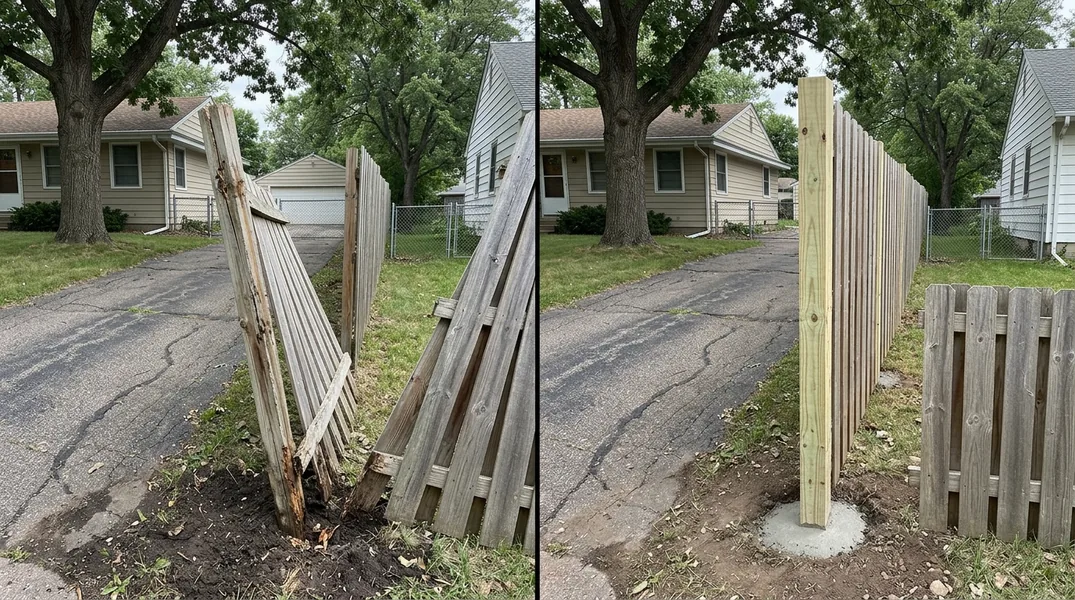
Why Do Fences Lean in Minneapolis After Winter?
If you've noticed your fence leaning or shifting after the harsh Minneapolis winter, you're not alone. This is one of the most common fence problems homeowners face in Minnesota, and understanding the cause is the first step toward fixing it. The culprit behind most leaning fences in our region is a natural phenomenon called frost heave, which occurs when the ground freezes and thaws repeatedly throughout the winter and spring seasons.
Frost heave happens because water in the soil expands when it freezes. As temperatures drop below freezing, moisture trapped in the earth around your fence posts turns to ice, which takes up more space than liquid water. This expansion pushes the soil upward and outward, gradually lifting and shifting fence posts out of their original positions. When spring arrives and the ice melts, the posts don't always settle back to where they started. Over multiple freeze-thaw cycles during a Minnesota winter, this displacement adds up, resulting in a noticeably leaning or crooked fence by the time warmer weather arrives.
Shallow Posts and Poor Installation: The Root Cause
While frost heave is a natural process that affects all fences in cold climates, the severity of leaning often comes down to how deep the fence posts were installed in the first place. Many older fences in the Minneapolis area were installed with posts set only 24 to 30 inches deep, which is insufficient for Minnesota's frost line. The frost line, or the depth at which soil remains frozen year-round, extends to approximately 42 inches in our region. Posts installed above this depth are far more vulnerable to frost heave damage.
Properly installed fence posts should extend well below the frost line to anchor them securely against the upward pressure of expanding frozen soil. When posts are too shallow, they act like levers, with the frost heave providing the force that tilts them. Additionally, posts set in poor-quality concrete or those without adequate compaction are more prone to movement. Inadequate drainage around the post hole can also trap water, making frost heave worse. If your fence was installed by an inexperienced contractor or during a rushed project, shallow post installation is likely the reason it's leaning now.
Recognizing Fence Leaning and Damage Before It Gets Worse
A leaning fence might seem like a cosmetic issue at first, but it's actually a structural problem that worsens over time if left unaddressed. The first sign is usually a noticeable tilt in one or more fence sections, often more pronounced on the side facing the prevailing winter winds. You might also notice gaps appearing between fence boards, or panels that no longer align properly with their neighbors. Some homeowners observe that gates no longer close smoothly or that pickets are visibly warped or bent.
Beyond appearance, a leaning fence loses its structural integrity and effectiveness as a privacy barrier or security boundary. The stress on leaning posts increases with each additional freeze-thaw cycle, accelerating deterioration of the wood and hardware. If your fence leans significantly, the posts themselves may crack or split, and the entire section could eventually collapse under wind load or the weight of snow. Early intervention through Wood & Privacy Fence Installation repair is far more cost-effective than waiting until posts fail completely and require full replacement.
Fence Post Repair and Replacement Solutions
If your fence is leaning, you have several repair options depending on the severity of the damage and the condition of the existing posts. For minor leaning where the posts are still structurally sound, straightening may be possible through careful adjustment and re-bracing. However, this is a temporary fix and rarely lasts through another Minnesota winter. A more permanent solution involves fence post replacement with new posts set at the proper depth below the frost line, typically 42 to 48 inches for our region.
During a proper fence post replacement, the old post is removed and a new one is installed in a fresh hole dug to the correct depth. The post is then set in concrete that extends well below the frost line and is properly compacted to eliminate air pockets that trap water. Some contractors also add gravel or sand at the bottom of the hole for improved drainage, which helps prevent water accumulation around the base of the post. This approach addresses the root cause of frost heave damage and ensures your fence will remain stable through many more Minnesota winters. If multiple posts are leaning or damaged, a section replacement may be more practical than repairing individual posts one at a time.
Leaning Fence Repair Near Me: When to Call a Professional
While some homeowners attempt DIY fence repairs, leaning fence repair is a job best left to experienced professionals who understand the specific challenges of Minnesota's climate and soil conditions. Improper post installation is often what caused the problem in the first place, so it's worth investing in expert work to get it right this time. Professional fence contractors have the proper equipment, knowledge of local frost line requirements, and experience diagnosing whether posts can be salvaged or need full replacement.
Minneapolis Fence Pros specializes in identifying and fixing leaning fence problems throughout the area. Our team understands exactly why fences fail in our climate and how to install repairs that actually last. We'll assess your fence, determine whether individual posts can be straightened or if full post replacement is needed, and provide you with a clear plan for restoration. Whether you have a wood privacy fence, vinyl fence, or another style, we have the expertise to handle it. Call us at (952) 206-3832 or request a free estimate to discuss your leaning fence concerns.
Prevention: How to Avoid Leaning Fences in the Future
The best approach to dealing with leaning fences is preventing the problem altogether. If you're planning to install a new Wood & Privacy Fence Installation or replace an existing fence, insist on posts being set at least 42 to 48 inches deep, well below Minnesota's frost line. Proper concrete installation with good compaction and adequate drainage is equally important. Quality materials and experienced installation cost more upfront but save thousands in repairs down the road.
Additionally, consider the type of fencing material you choose. While wood fences are beautiful and popular in Minneapolis, they require more maintenance in our climate. Vinyl & PVC Fence Installation options offer excellent durability and require minimal maintenance, though they still require posts to be installed correctly to prevent frost heave issues. Whatever material you select, working with a reputable local contractor who understands Minnesota's unique weather challenges is essential. Don't let a leaning fence ruin your property's appearance or security. Contact Minneapolis Fence Pros today at (952) 206-3832 to discuss repair or replacement options.
Looking for a professional tree service in Minneapolis? Minneapolis Fence Pros responds fast for all your fence needs.
Get a Free Quote